By surface & project
Kitchens and furniture
Paint cupboards and furniture, stain solid wood cabinets, or oil a table
| Route | What you use | What it gives you |
|---|---|---|
| Paint: kitchen cupboards and furniture | Multi-Surface Eggshell over Multi-Surface Primer | A hard-wearing finish that resists stains such as wine, coffee and crayon |
| Wood: solid wood or veneered cabinets | Light Fast Stains or Earth Stains, then Quick Dry Kitchen and Bathroom Varnish | New colour with the grain showing; wipeable and quick drying |
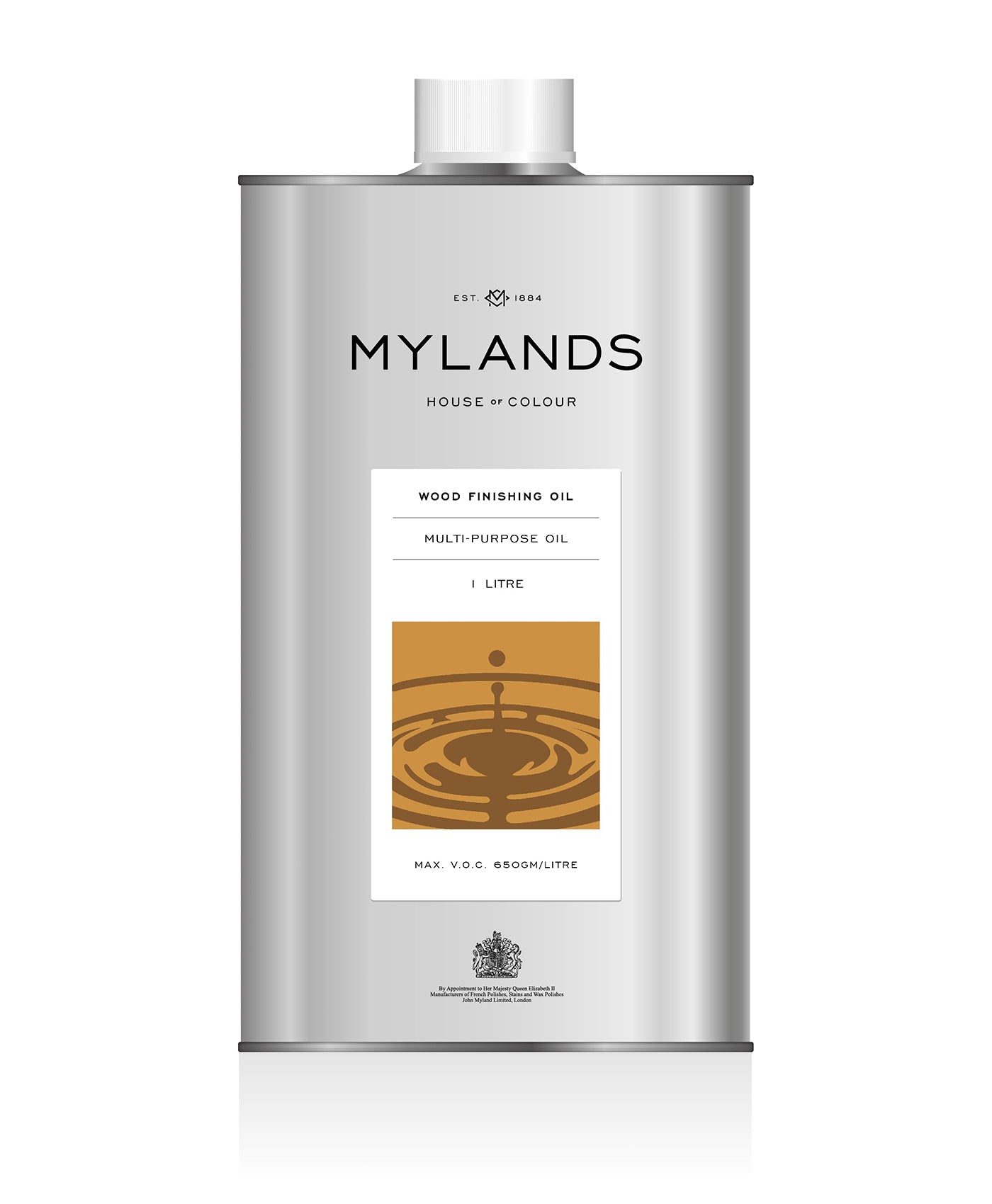
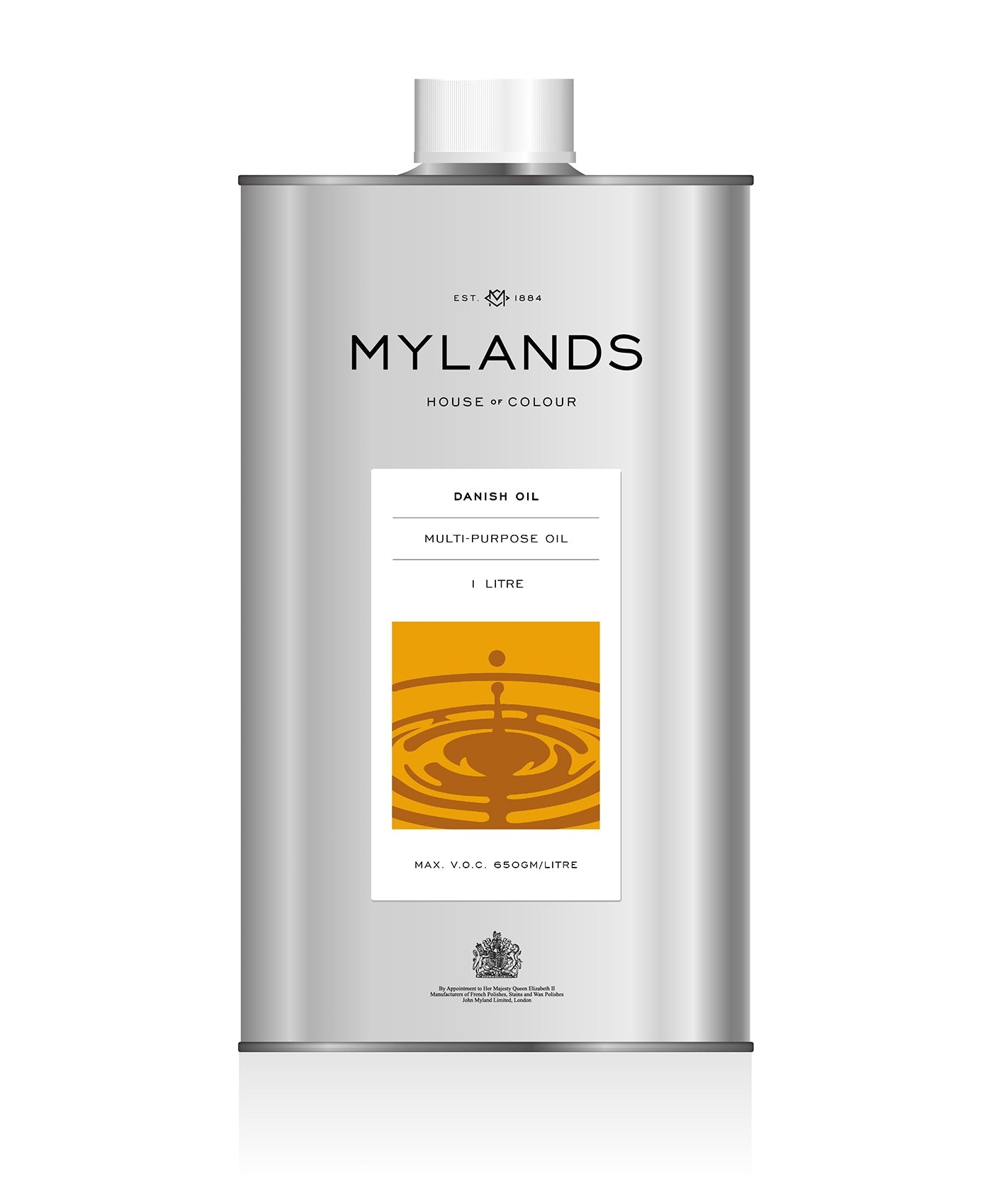
| Wood: tables | Wood Finishing Oil, Danish Oil, Hard Wax Oil, Pure Tung Oil or Food Safe Oil | A warm, natural finish you can repair in one spot |
Paint
The paint route
Paint for cupboards and furniture, over the right primer.
Step by step
Painting cupboards and furniture
Paint between 8°C and 30°C and stir well.
-
Clean and sand
Remove dirt, grease and loose or flaking paint, then sand to a sound, smooth surface.
-
Seal knots
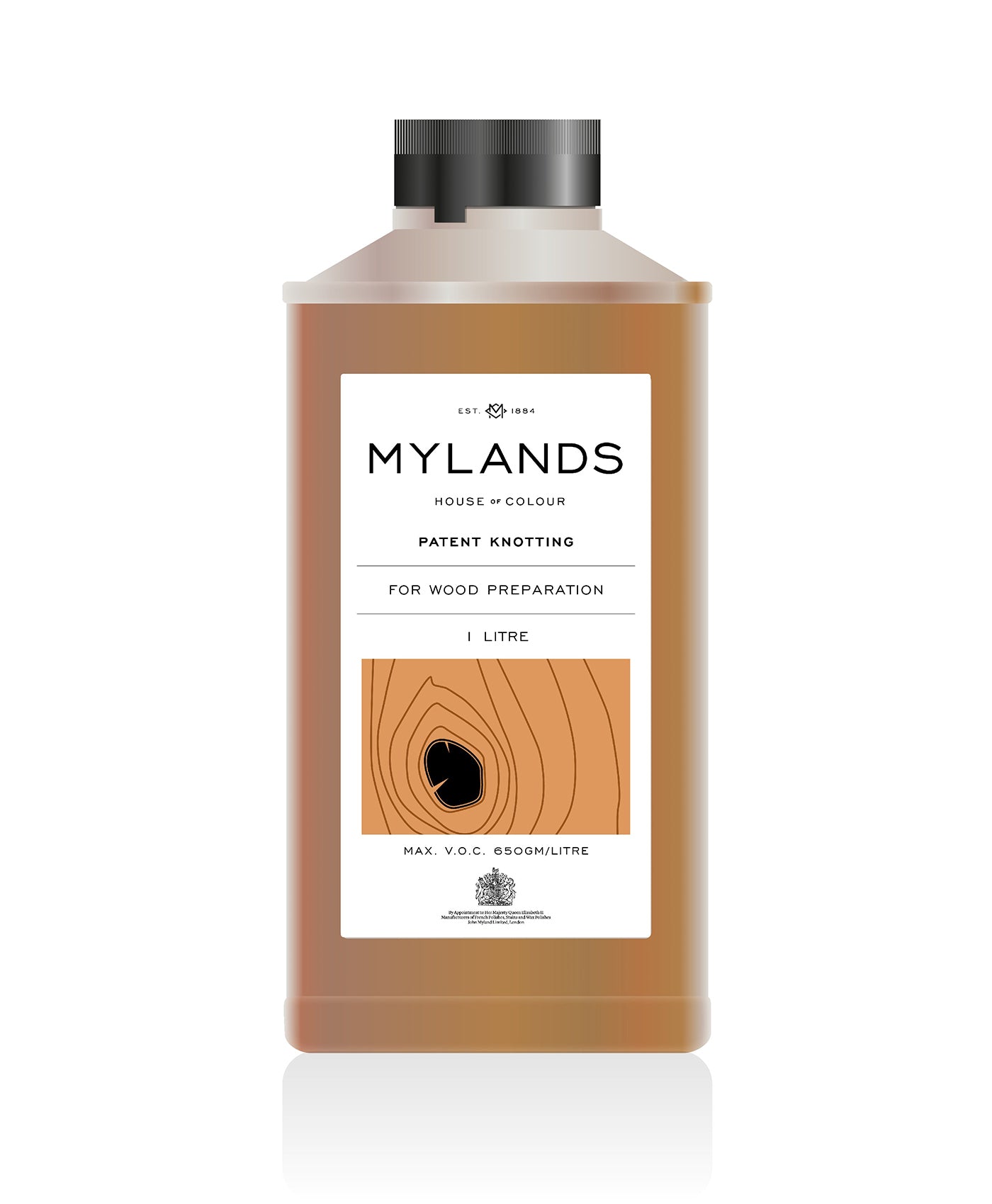
Seal resinous knots in bare wood with Patent Knotting.
-
Prime
Multi-Surface Primer on bare or new surfaces, including bare wood, MDF and metal.
-
Two coats
Two coats of Multi-Surface Eggshell, 3 to 4 hours apart. It is touch dry in 1 to 2 hours.
Shop
For painting cupboards and furniture

Wood finish
The stain route
For solid wood cabinets: stain them, then protect them.
Check first
Staining kitchen cabinets: can yours be stained?
| Your doors are | Can you stain them? |
|---|---|
| Solid wood (oak, ash, pine, cherry, walnut) | Yes, once the old finish is removed |
| Real wood veneer over board | Yes, carefully. Veneer is thin, so sand very lightly by hand |
| MDF, vinyl-wrapped, foil or laminate | No. There is no wood grain to take the stain. Painting is the better option |
| Already painted | Only if you strip all the paint back to bare wood |
A quick check: if the grain runs continuously around the edge of a door, it is likely to be solid wood. A thin layer of wood over a different core is veneer.
Staining kitchen cabinets
Choose the stain and the varnish together
| Stain | Why choose it for cabinets | Topcoat |
|---|---|---|
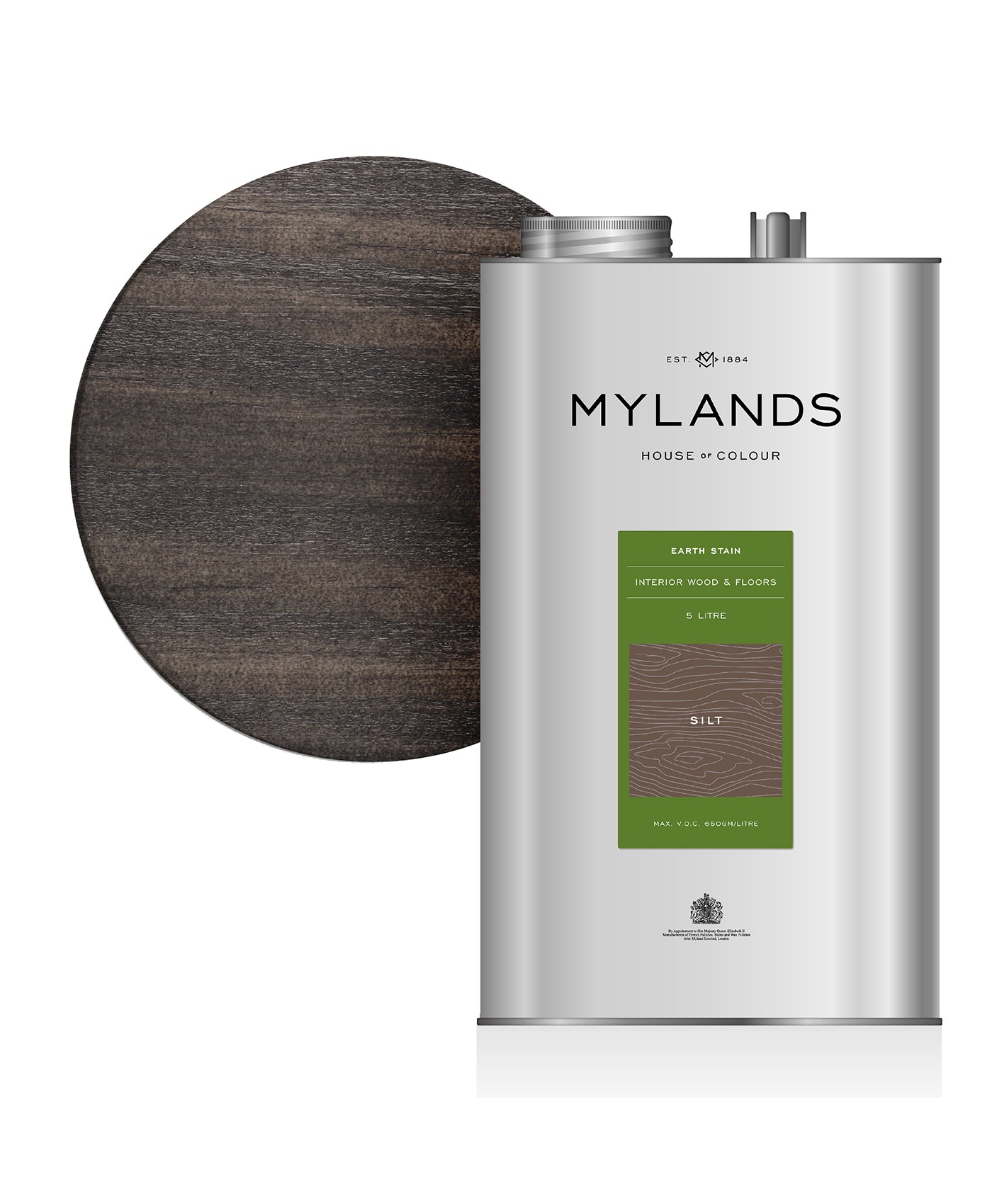
| Light Fast Stains | Strong, clear colour that resists fading, and dries fast | Quick Dry Kitchen and Bathroom Varnish |
| Earth Stains | Soft, natural, low-odour colours | Quick Dry Kitchen and Bathroom Varnish |
| Water Stains | Traditional, deep, even colour | Quick Dry Kitchen and Bathroom Varnish, over a coat of Shellac Barrier Seal once the stain is fully dry |
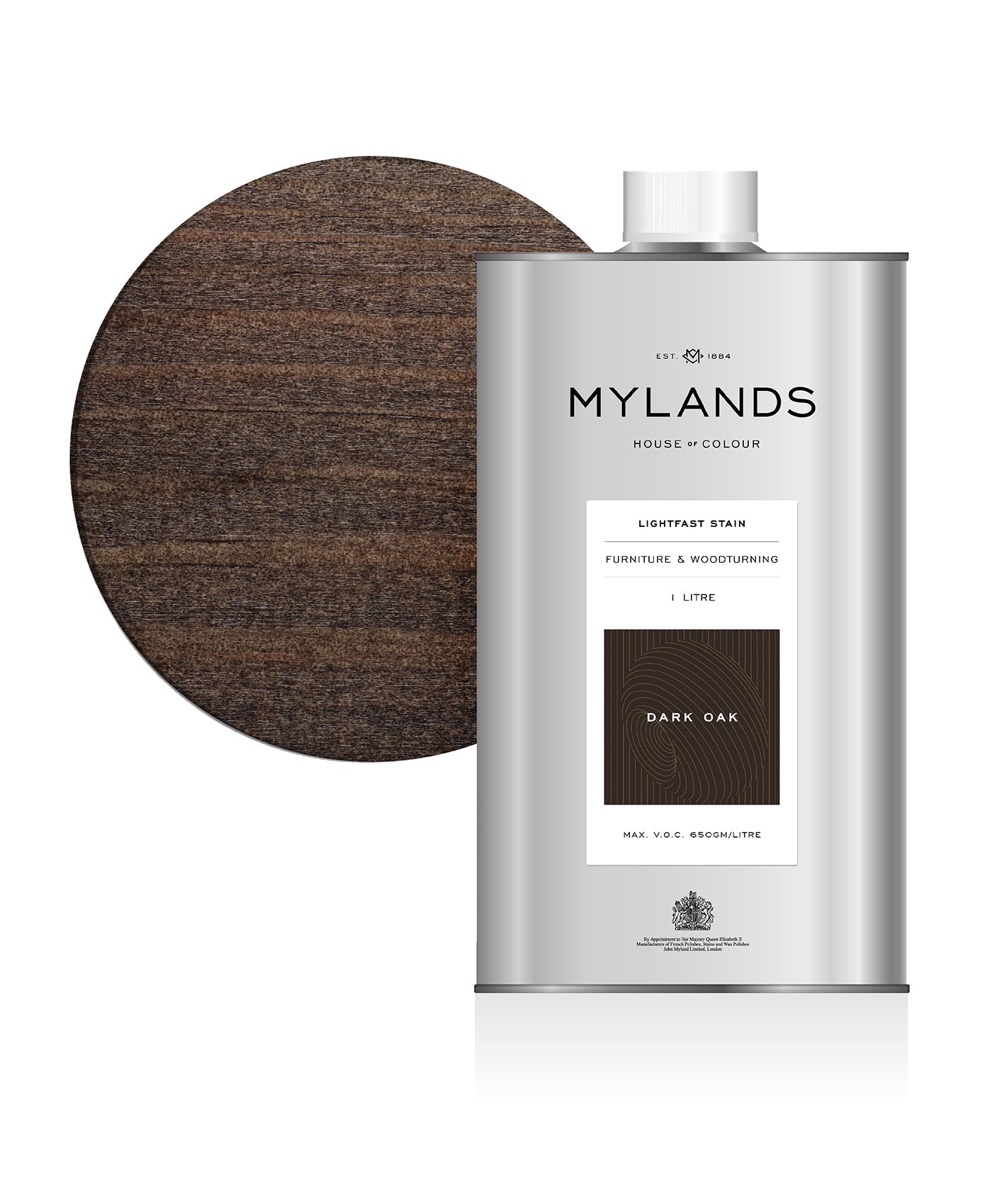
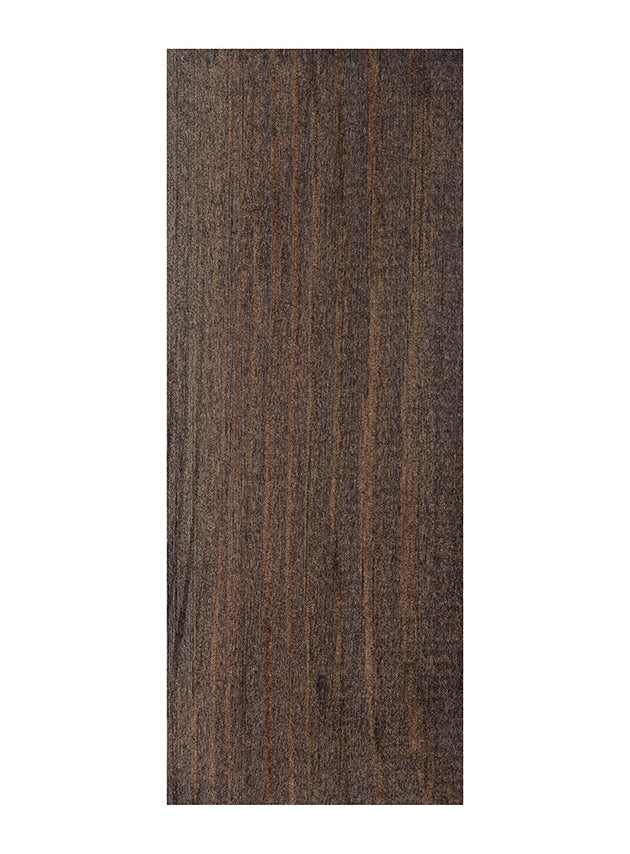
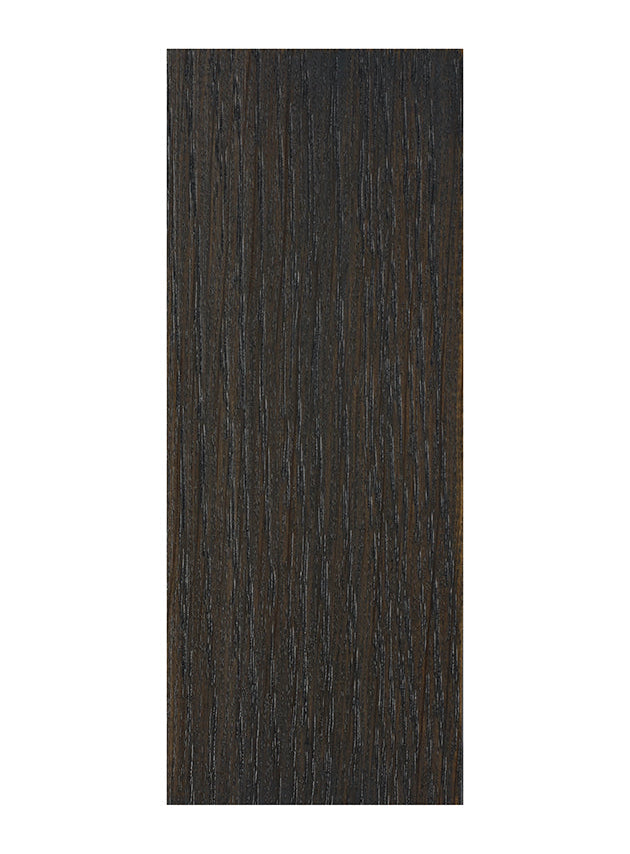
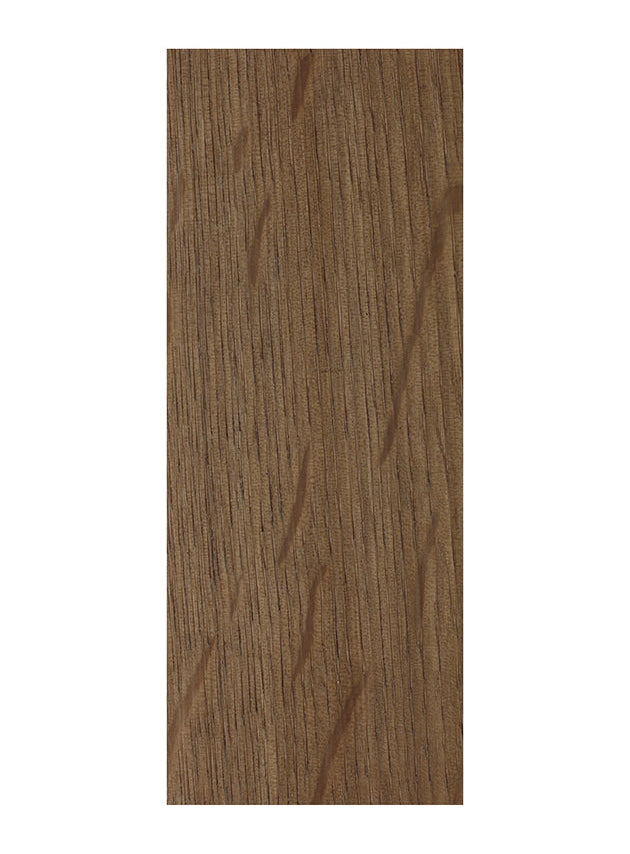
To calm orange pine or golden oak, choose a cooler colour such as Light Fast Stain Dark Oak, or Earth Stain Silt or Washed Umber. Stain can only make wood darker, never lighter.
Staining kitchen cabinets
Prepare, stain, varnish
-
Make a test door
Do the whole job on a drawer front or offcut first, and judge it dry in your own kitchen light.
-
Take the doors off
Remove doors, drawer fronts, handles and hinges, label everything and lay the doors flat on trestles.
-
Degrease
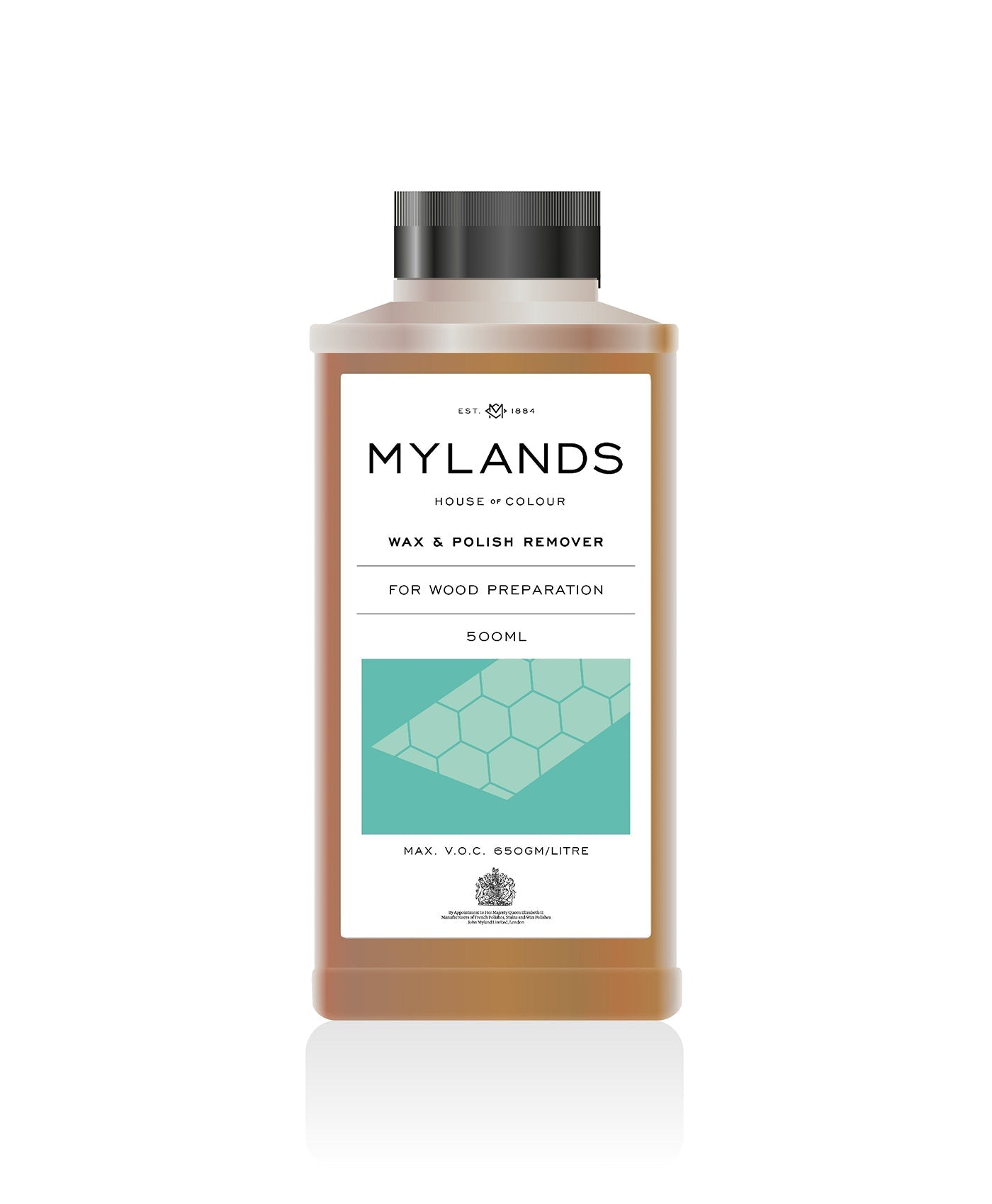
Clean with warm water and detergent, rinse and let them dry. Lift any old wax with Wax and Polish Remover.
-
Back to bare wood
Strip or sand off the factory lacquer completely, then sand along the grain at 120, then 240 to refine. Go gently on veneer.
-
Stain panel by panel
On panelled doors: the inner panel, then the rails, then the stiles, along the grain. Wipe off the surplus with a lint-free cloth.
-
Build colour gradually
A second light coat is better than one heavy one. Stain the frames and end panels too, so everything matches.
-
Varnish
Over Water Stains, a coat of Shellac Barrier Seal first. Then a thin first coat of Quick Dry Kitchen and Bathroom Varnish, a light denib with 240 grit once dry, and at least two more coats, 3 to 4 hours apart at 20°C.
-
Mind the conditions
Varnish between 10 and 30°C, with humidity no higher than 75%. Handle the doors with care after 24 hours; the varnish takes 5 to 7 days to cure fully.
From the Mylands Experts
Why the grease matters
Years of cooking leave a fine, invisible film of grease on every cupboard door, especially those near the hob. Stain will not soak through it and varnish will not stick to it. That is why the most important step in staining a kitchen happens before you even open the tin.
Shop
For staining cabinets

Wood finish
The oil route
Which oil for a table, and how to put it on.
Oiling a table
Which oil is best for a table?
| Oil | Choose it for | Good to know |
|---|---|---|
| Wood Finishing Oil | Dining and kitchen tables in daily use | Made for tables, worktops and furniture in constant use; tung oil adds strength |
| Danish Oil | A quick, easy satin finish | Fast drying and water resistant; may need refreshing more often |
| Hard Wax Oil | A tougher, more spill-resistant natural finish | Oil and wax in one, with a soft sheen |
| Pure Tung Oil | A traditional, patient, pure oil finish | Builds water resistance slowly through many thin coats |
| Food Safe Oil | A table that doubles as a food-prep surface | Food safe, tasteless and odourless; reapply more often |
Oiling a table
How to oil a table with Wood Finishing Oil
Sand a bare table along the grain at 120, then 240 to refine. Varnish or lacquer must come off first; lift old wax with Wax and Polish Remover; a French polished table may be better revived than stripped, so ask us.
-
Thin coat
Apply along the grain with a lint-free cloth or brush. Do the underside and edges too.
-
Wipe off the surplus
After a few minutes, wipe off every trace. Oil left on the surface stays sticky.
-
Let it dry
Touch dry in about 4 hours; leave 12 hours before the next coat at 20°C.
-
Rub down
Rub down lightly between coats with very fine abrasive or wire wool, and dust off.
-
Three or four coats
At least three coats; three to four for a dining table in daily use. Coverage is 10 to 12 m² per litre per coat.
-
Keep it up
Re-oil when the surface starts to look dry or dull, usually once or twice a year.
Martin’s advice
More oil, applied heavily, does not give a faster or better finish. Thin coats, with every trace of surplus wiped off, build lasting protection.
Shop
For oiling a table
Questions
Kitchen and furniture questions
Can I stain MDF or vinyl-wrapped cabinets?
Can I stain kitchen cabinets darker?
How do I stop my pine kitchen looking orange?
How many coats of oil does a table need?
Why is my oiled table sticky?
Can I oil over varnish?
Need advice?
Ask our team
Call us on 020 8670 9161, Monday to Friday, or visit our showroom in West Norwood. We make every tin, so we can answer almost anything.